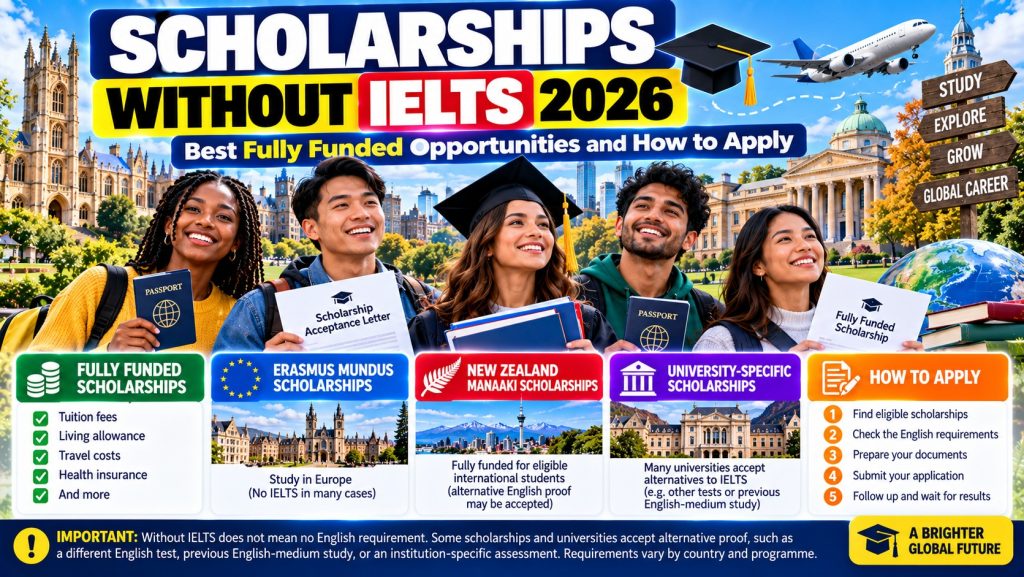
Studying for a master’s degree in New Zealand can be expensive for international students, but fully funded scholarship opportunities can make it possible to study with much less financial pressure. One of the most important opportunities to investigate in 2026 is the Manaaki New Zealand Scholarship, a government-funded programme for eligible citizens of developing and partner countries.
Manaaki scholarships include full tertiary scholarships for eligible international students to study full-time at a New Zealand or Pacific education institution.
For students who qualify, the scholarship can cover major study and living expenses, making New Zealand an attractive destination for postgraduate education.
What Is the Manaaki New Zealand Scholarship?
The Manaaki New Zealand Scholarship is a New Zealand Government scholarship programme designed to support students from eligible developing countries.
The programme is focused not only on education but also on helping scholars contribute to the social and economic development of their home countries after completing their studies. Scholarship recipients are expected to contribute to their country’s development for at least two years after completing their scholarship.
This makes the programme different from scholarships that simply provide financial assistance. Applicants need to demonstrate how their proposed education can benefit their communities and country.
What Does the Scholarship Cover?
A full Manaaki New Zealand Scholarship can provide substantial financial support.
According to the official scholarship information, support can include:
- Full tuition fees
- Living allowance
- Establishment allowance
- Medical insurance in New Zealand
- Tutoring support where required
- Travel to and from the student’s home country
The establishment allowance can help with initial expenses such as accommodation, textbooks and study materials.
Because the exact scholarship package can depend on the programme and circumstances, applicants should always check the official scholarship information for their intake.
Who Can Apply?
Eligibility depends on the applicant’s citizenship and the scholarship programme.
Applicants must first confirm that their country is included in the current Manaaki eligibility list. The programme also considers factors such as where the applicant has lived, work experience and whether their proposed study aligns with development priorities.
For postgraduate applicants, Manaaki generally requires relevant work experience. The official criteria state that applicants normally need either one year of full-time work experience or two years of part-time work experience.
Applicants also generally need to have lived in their home country for the two years immediately before applying, subject to specific exceptions.
What Master’s Subjects Are Available?
The subjects available depend on the country, scholarship intake and development priorities.
Potential areas can include fields such as:
- Agriculture
- Public health
- Education
- Environmental management
- Renewable energy
- Governance
- Development studies
- Information technology
- Business and economics
- Climate-related studies
- Food security
Applicants should not assume that every master’s programme at every New Zealand university is automatically covered.
The proposed programme should fit the scholarship’s eligibility requirements and the applicant’s professional background and development goals.
Academic Requirements
Applicants need an academic background appropriate for the master’s programme they are applying for.
Universities can have their own entry requirements covering previous qualifications, grades, English-language ability and prerequisite subjects.
A scholarship applicant therefore needs to satisfy two separate levels of requirements:
- The scholarship’s eligibility requirements.
- The university’s admission requirements.
Meeting one does not automatically mean you meet the other.
English Language Requirements
English-language requirements depend on the university and programme.
Manaaki’s official guidance explains that shortlisted applicants may need to take an English-language test if required for their chosen programme. Some applicants may also receive English-language training under specific circumstances.
Applicants should therefore check the exact English requirements of their preferred university before preparing an application.
How to Apply for a New Zealand Master’s Scholarship
The first step is to check whether your country is eligible.
After confirming eligibility, prospective applicants should:
Step 1: Research the Scholarship
Read the official eligibility criteria carefully. Check your citizenship, residency, work experience, academic background and development goals.
Step 2: Choose an Appropriate Study Area
Select a master’s programme that matches your academic background and professional experience.
Your proposed study should also make sense in relation to your future plans and how you intend to contribute to your home country.
Step 3: Prepare Your Documents
Common documents can include:
- Academic certificates
- Academic transcripts
- Passport or identification
- Employment evidence
- Curriculum vitae
- Personal statements
- References
- English-language evidence where required
Do not submit false or altered documents. Information provided in your scholarship and university applications should be accurate and consistent.
Step 4: Explain Your Development Goals
This is an especially important part of a Manaaki application.
The programme expects scholars to contribute to their country’s social or economic development after their studies. Applicants should therefore clearly explain the problem they want to address, the skills they need and how their education can help create a practical impact.
Step 5: Apply Through the Official System
Always use the official Manaaki scholarship application system and follow the instructions for your country and intake.
Do not pay unofficial agents who promise to guarantee a scholarship.
Do You Still Need a Student Visa?
Yes. Winning a scholarship does not automatically give you permission to study in New Zealand.
Recipients of New Zealand Government-funded scholarships can apply for the NZ Government Scholarship Student Visa. Immigration New Zealand states that applicants need confirmation that tuition fees and living costs will be paid by the qualifying scholarship, along with the other visa requirements.
Manaaki also states that if a scholarship recipient does not obtain the required student visa, the scholarship can be withdrawn.
Can You Work While Studying?
Depending on the conditions attached to the student’s visa, international students may be allowed to work while studying.
Immigration New Zealand states that the NZ Government Scholarship Student Visa can allow students to work part-time up to 25 hours per week while studying and full-time during holidays, depending on their visa conditions.
Students should always check the conditions on their own visa before starting employment.
What Happens After a Master’s Degree?
New Zealand has also updated some post-study work pathways.
From 16 November 2026, eligible graduates who complete an eligible master’s degree may qualify for a three-year Post-Study Work Visa, provided they meet the applicable requirements, including completing at least 30 weeks of full-time study in the qualification used for the visa.
This can make a New Zealand master’s degree particularly attractive to international students who want to gain professional experience after graduation.
However, a scholarship recipient should not assume that receiving a scholarship automatically guarantees a post-study work visa. Immigration eligibility is assessed separately.
Important: “Study for Free” Does Not Mean Every Cost Is Automatically Covered
A fully funded scholarship can cover major expenses, but students should carefully read the exact terms of their award.
For comparison, Immigration New Zealand’s general student-visa guidance currently requires tertiary students who are paying their own living expenses to demonstrate NZD $20,000 per year for living costs. A scholarship award letter can be used as evidence of funding where applicable.
Manaaki scholars receive specific financial support under the scholarship programme, including living and establishment allowances.
Tips for Winning a New Zealand Master’s Scholarship
Competition can be strong, so applicants should avoid submitting generic applications.
Here are some practical tips:
Choose a relevant programme: Your proposed master’s degree should connect naturally with your education, experience and career goals.
Explain your impact: Show how your education could benefit your community or country.
Use real examples: Discuss actual work, volunteer activities, leadership experiences or projects.
Make your application consistent: Your CV, academic history, work experience and personal statements should tell the same overall story.
Research carefully: Understand the scholarship organization and the development priorities relevant to your application.
Prepare early: Collect transcripts, references and other documents before the application deadline.
Check eligibility twice: Scholarship rules can vary by country and intake.
Final Thoughts
A master’s scholarship in New Zealand can provide an excellent opportunity for international students who want a high-quality postgraduate education without carrying the full cost of international tuition and living expenses.
The Manaaki New Zealand Scholarship is one of the most important government-funded options to investigate in 2026. For eligible recipients, support can include tuition, living assistance, establishment costs, medical insurance, tutoring and international travel.
However, applicants should remember that eligibility is highly specific. Your country, work experience, academic background, proposed programme and development goals all matter.
The best approach is to start with the official eligibility criteria, choose a suitable master’s programme, prepare strong evidence of your experience and clearly explain how your education can create positive results after you return home.
If you meet the requirements, this could be an opportunity to earn a master’s degree in New Zealand while receiving substantial financial support and building an international academic and professional network.